a worldwide moment
Among the many ways to celebrate 8 August 2008 (080808): World Wide Moment.
The trade-off: while I was in Paris, alumni of the MA Journalism program of the Konrad Adenauer Asian Center for Journallism (ACFJ) at the Ateneo de Manila University converged in Manila for a homecoming conference.
The conference was the 3rd Forum of Emerging Leaders in Asian Journalism held on 11 and 12 July at the Ateneo Loyola campus.
It turned out to be a productive gathering. Aside from the conference itself, the group met and decided on a number of things, among them:
The formal establishment of the Ateneo ACFJ Alumni Association: With alumni coming from many different countries in Asia and diverse backgrounds, this group has the makings of a solid network for cooperation and unity among journalists and media practitioners. From day one of the MA program, it was evident that we would make good contacts, if not friends, from across the region.
Putting up a blog for the association: In all things, we must practice what we preach. We profess to be producers and gatekeepers of information, so we ourselves must be able to keep up. Convergence and multimedia are the buzzwords of the day, and we must be able to talk the talk, as they say.
Read more about the conference here.
The annual conference of the Asian Media Information and Communication Centre (AMIC), held at the Manila Hotel this year, was an eye opener.
The list of topics and names on the program was certainly exhaustive enough to overwhelm. But to actually be there and see researchers and practitioners sharing their experiences and talking about future directions made one feel how diverse and dynamic the region and the field are.
The session on alternative media was an interesting mix of old and new: Sanskrit writings and their relationship to journalism principles, and a survey of community-based approaches to broadcasting as practised by Church-owned radio stations in the Philippines on the one hand; and citizen journalism as practised by a news organization in Malaysia, and a uses and gratifications analysis of Facebook uses at the University of Singapore, on the other.
It was an interesting session, not only because the presentations were interesting in themselves, but also for the selection of these presentations under the classification of alternative media. Indeed, the term "alternative" is broad enough to apply to old and new -- the traditional and the cutting-edge -- as represented by these topics from the societies of India, the Philippines, Malaysia, and Singapore.
During the conference, AMIC launched six new publications, including the Asian Communication Handbook 2008, Media and Conflict Reporting in Asia, and Media and Development in Asia: Regional Perspectives.
A report posted yesterday on the CBCP News site urges Filipino Catholics to support the Church's media apostolate, as Catholics everywhere celebrate World Communications Day tomorrow.
I don't know how aware Filipino Catholics are about the media apostolate of the Church. In any case, the report caught my attention because it is related to my master's project.
media and vatican II
Even before the Vatican II conference, the Catholic Church had already recognized the importance of media in their mission. It was only during Vatican II, however, that they issued their first official document on the topic -- the Inter Mirifica.
The document introduced the term "social communication" -- a catchall for any form of interpersonal communication. This included media, literature, theater, film, dance, music, and the visual arts. The term is broad enough to include the Internet and even SMS.
A follow-up document called Communio et Progressio established the Church's media apostolate. It recommended that the Church set up media offices and assign priests, nuns, and lay workers to manage these offices.
Today, one will find a media office at almost every level of the Church hierarchy -- from the Vatican to the smallest local parish.
In the Philippines, there is the Catholic Bishops Conference of the Philippines (CBCP) Episcopal Commission for Social Communication and Media, the National Office of Mass Media, and media offices at the level of the archdiocese and diocese. Different congregations own and manage their own media arms. The secretary of the Federation of Asian Bishops Conferences Office of Social Communication (FABC-OSC) also holds office here.
why a media apostolate?
In the above Church documents, there is recognition that social communication -- including media -- is necessary as a means to evangelize.
Undoubtedly, the Catholic Church wields influence in Philippine society. It is active in the lives of most Filipinos, who are baptized, married, and buried in Catholic rites. Its presence is felt in even the smallest and remotest barrios, where parish priests are respected members of the community. Churches are crammed with faithful followers on at least two days of the year -- Easter Sunday and Christmas.
Considering the pervasiveness of the Catholic culture in our society, is a media apostolate still needed? On the other hand, are Church-owned or otherwise Catholic media effective in their mission of evangelizing or of deepening the faith of Filipino Catholics? Do Filipinos read Church-owned newspapers and publications, watch or listen to Catholic programs, or visit Church-run websites?
"a choice"
Bishop Bernardino Cortez, who heads the Episcopal Commission on Social Communication and Media, described Catholic media as "a choice" that allows us "to be strengthened in our faith" in confusing times.
After all is said and done, this is probably the best way to describe Catholic media: a choice. Such a choice would not be available in other countries, particularly those where freedom of expression is not guaranteed by the constitution. The presence of Church-owned media is, at the very least, an indication that we are still a democracy. We are still free -- free to worship as we please, free to choose what we read or watch or listen to, and free to decide for ourselves which course of action to take.
"Walang sinuman ang nabubuhay para sa sarili lamang, walang sinuman ang namamatay para sa sarili lamang (No one lives for himself alone, no one dies for himself alone)."
These simple words, plus an equally simple melody, make up the song Pananagutan. I remember learning this and other Catholic Mass songs as a second grader in a school run by nuns. The songs were all very easy to learn, and very "hummable," especially for me and my classmates. At the time, of course, I had no idea that the songs were a result of Vatican II -- and that they in turn would inspire other composers like Fr. Manoling Francisco, SJ, known for Hindi Kita Malilimutan (I will Never Forget You) and Tanging Yaman (One Treasure), and Fr. Arnel Aquino, SJ, of the Lauds series of CDs and tapes.
Neither did I know that I would one day get to meet the man who composed Pananagutan and the first Filipino mass songs -- Fr. Eduardo Hontiveros, SJ, better known as Fr. Honti. I had the opportunity to work with him for his CD entitled "Pananagutan" -- a tribute to him by his younger Jesuit brothers in the music ministry, known collectively as Himig Heswita. By then, he had had a couple of strokes or maybe more. He kept his arm at his side, his hand in a fist.
He could hardly speak but he tried to communicate in other ways. When asked to describe his songs, he bent over and laid his hand, palm down, at knee-level. It was a simple gesture, but it said a lot. He composed simple songs so that the common man, the masa -- anybody -- could sing them, and not just the trained singer or church choir member. In a Catholic world experiencing change after Vatican II, and striving to remain relevant, Fr. Honti was part of that change and part of that relevance. His songs were his pananagutan (responsibility) to all of us as both priest and composer.
Fr. Honti passed away a few days ago. But his songs have made their mark in the Philippine Catholic community. He has helped mold a generation of Filipino liturgical music composers, not to mention a Filipino mass culture. From the humblest chapel to the grandest cathedral, his songs have taken flight. They may not be as well known now as the newer mass songs, but he was the composer who started it all. His legacy lives on. Because of this, Fr. Honti will be remembered as "the father of Philippine liturgical music."
This is the winning entry in the Proudly Pinoy competition.
I had forgotten all about this until today. Reviewing the entries, it was interesting how the concepts of being Pinoy (Filipino) and of pride were translated as badges.
What makes a Filipino proud? What makes one proud to be a Filipino?
To all the participants, thank you for reminding us of our being Pinoy.
And to the organizers of the competition, thank you for the badge.
My "Proudly Pinoy Blog" badge (to the right of the screen) will soon get a replacement.
A competition to design a "Proudly Pinoy" logo to be used without charge on Filipino-owned web sites and blogs was recently launched.
The organizers of this competition, which ends on 11 July, no doubt realize the importance of establishing a distinct Pinoy identity on the web.
Displaying this badge on your site or blog is the virtual equivalent of planting the country's flag atop a mountain. But more than being a symbol of Pinoy pride, the badge identifies you as a member of the community of online Filipinos.
How many Filipinos own web sites? How many are bloggers? The number can't be that big, considering that as of last year, there were only a little over seven million Internet users in the Philippines. That's about nine percent of our total population.
But consider this: for such a small nation, we are on the Internet map. Pinoys are on the Internet and not just as consumers, but more importantly, as producers -- whether as web designers outsourced by foreign companies, or as bloggers whose hits come from all over the world.
So a "Proudly Pinoy" badge makes sense.
The winning designer will get P10,000 (a little more than $200). As of this post, 71 entries have been submitted and can be seen on the site.
Along with Sen. Rodolfo Biazon, there are three newly elected retired or otherwise former military officers and graduates of the Philippine Military Academy in our Senate: Panfilo Lacson and Gregorio Honasan (PMA '71) and Antonio Trillanes (PMA '95).
I was able to catch the first part of the recent edition of ANC's "Strictly Politics" with all of these cavaliers (as PMA'ers are called) as guests, except for Trillanes. The fact that there are four of them in the Senate has become a cause for recent concern and discomfort. The presence of former military officers in the Cabinet and other areas of public service, and now in the Senate -- what is this, some kind of club? Unfortunately, the proverbial fuel was added to the fire with the statement of one of them, editorialized in the Philippine Daily Inquirer, a few days ago, that essentially -- yes, there is some sort of club.
My interest is the commonality among the four. What binds them together is the PMA experience -- the discipline, the values, and the lessons learned within the walls of Fort del Pilar as well as out on the field. It is not necessarily the same experience, but the bond exists, forged by a code of conduct we can only wonder about. Yet, is this bond enough for them not to go head to head over matters that may arise in the future?
Belongingness, as I mentioned in my previous post, stems from such commonalities. They all are PMA graduates, and so we can assume that to some extent, they shared one community. But years after the PMA, and with years apart among them (except for Honasan and Lacson, who were classmates) -- were their communities still the same? Was Biazon's cadet life the same or at least comparable to Trillanes'? What about Lacson and Honasan, mistahs though they are, did they experience the same military experiences after leaving the PMA?
I wanted to see where the discussion was going, but didn't have much time to watch. I stayed long enough to hear Sen. Honasan say that in the Senate, it's the national agenda they are pushing, not the agenda of the bugo-bugo -- a term of endearment used at first for plebes, and later, for fellow PMA'ers. Can we trust their definitions of the national agenda, considering the very different personalities and alignments of the four? All of them were involved in their own different interpretations of service to the nation at some point in their careers -- whether mutiny, coup d'etat, or defense.
Commonalities or not, their first duty -- as well as that of the other senators, for that matter -- is in the exercise of their responsibilities as elected senators. It is to the public, the people that elected them, that they must prove themselves and be accountable. Not to the PMA, as institution and community, and certainly not to the bugo-bugo.
Today, I went to school and waited for my turn to have some papers processed. I was one of only three graduate students in the waiting area, apparent not only by our dress, but also by the fact that we three were the only ones unaccompanied by friends -- and therefore, the only ones who were quiet. Most interesting was the conversation going on around us during that wait. Everyone was speaking in English. If anyone spoke in Pilipino, it was with a distinct non-Filipino accent, or it was actually Taglish.
One guy was engaged in a particularly loud and annimated conversation with another guy. His speech was peppered with four-letter words:
...and then, you know, this guy was beating the **** out of him! He was really like... wow, man... **** talaga!
In his book Imagined Communities: Reflections on the Origin and Spread of Nationalism, anthropologist Benedict Anderson defines a nation as "an imagined political community":
It is imagined because the members of even the smallest nation will never know most of their fellow-members, meet them, or even hear of them, yet in the minds of each lives the image of their communion.... (A)ll communities larger than primordial villages of face-to-face contact (and perhaps even these) are imagined. Communities are to be distinguished, not by their falsity/genuineness, but by the style in which they are imagined....
The nation is imagined as limited because even the largest of them encompassing perhaps a billion living human beings, has finite, if elastic boundaries, beyond which lie other nations. No nation imagines itself coterminous with mankind. The most messianic nationalists do not dream of a day when all the members of the human race will join their nation in the way that it was possible, in certain epochs, for, say, Christians to dream of a wholly Christian planet....
Finally, it is imagined as a community, because, regardless of the actual inequality and exploitation that may prevail in each, the nation is always conceived as a deep, horizontal comradeship. Ultimately it is this fraternity that makes it possible, over the past two centuries, for so many millions of people, not so much to kill, as willingly to die for such limited imaginings.
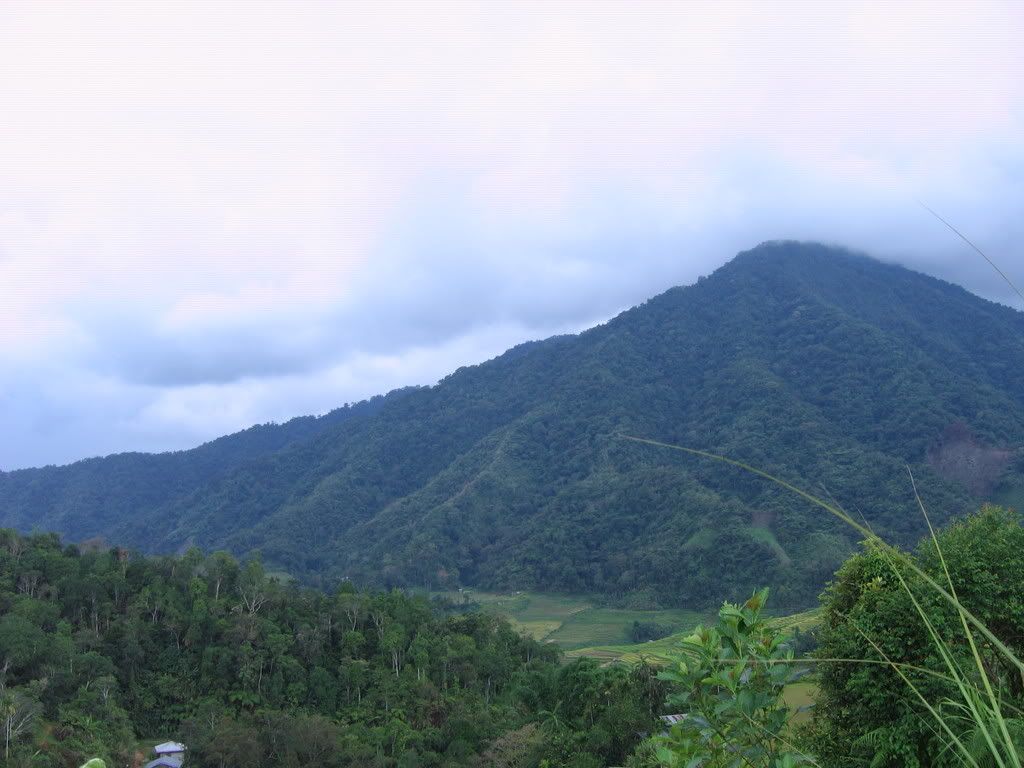
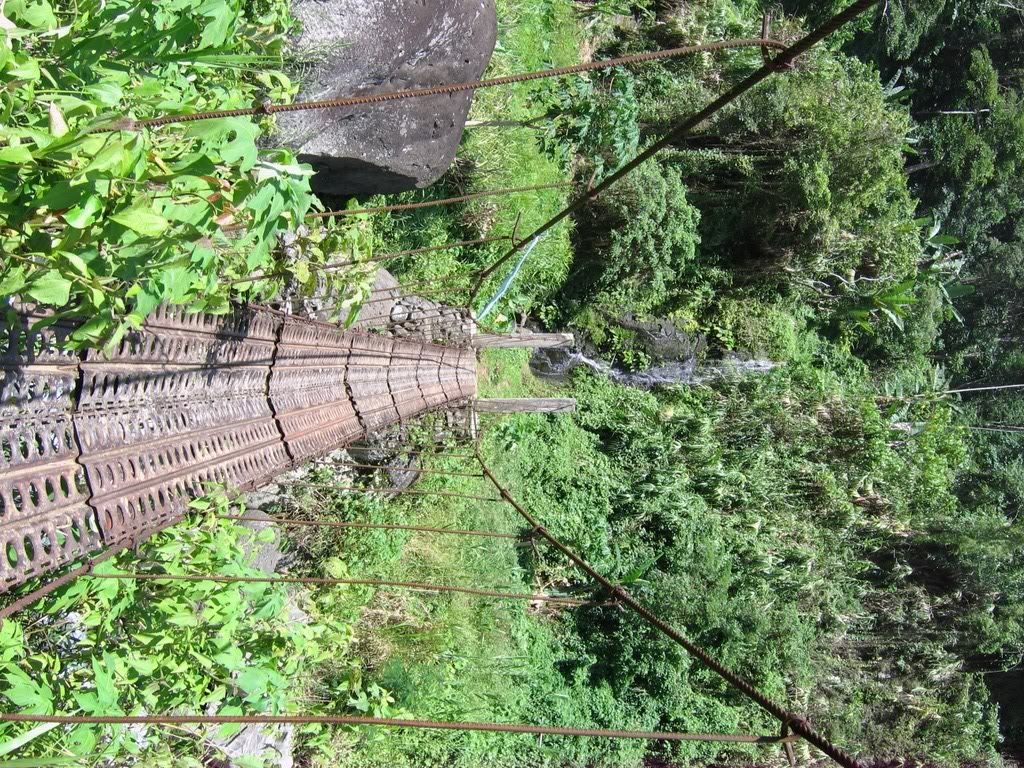 In Asipulo, I was in a totally different place from where I live, in a situation I would not quite have imagined myself to be, amid people who were strangers to me. Yet, I felt I belonged, perhaps because this place was part of my nation -- imagined or not -- but more importantly, because the people recognized in me a co-member in a very real community called mankind.


